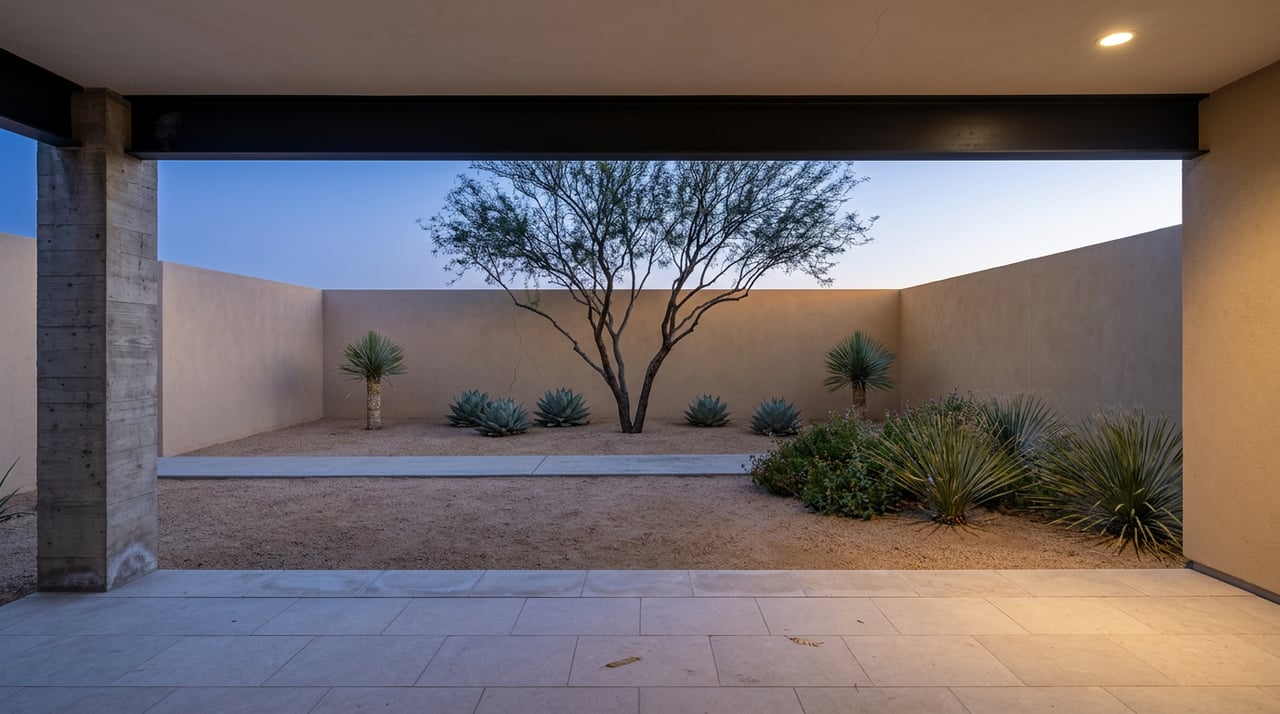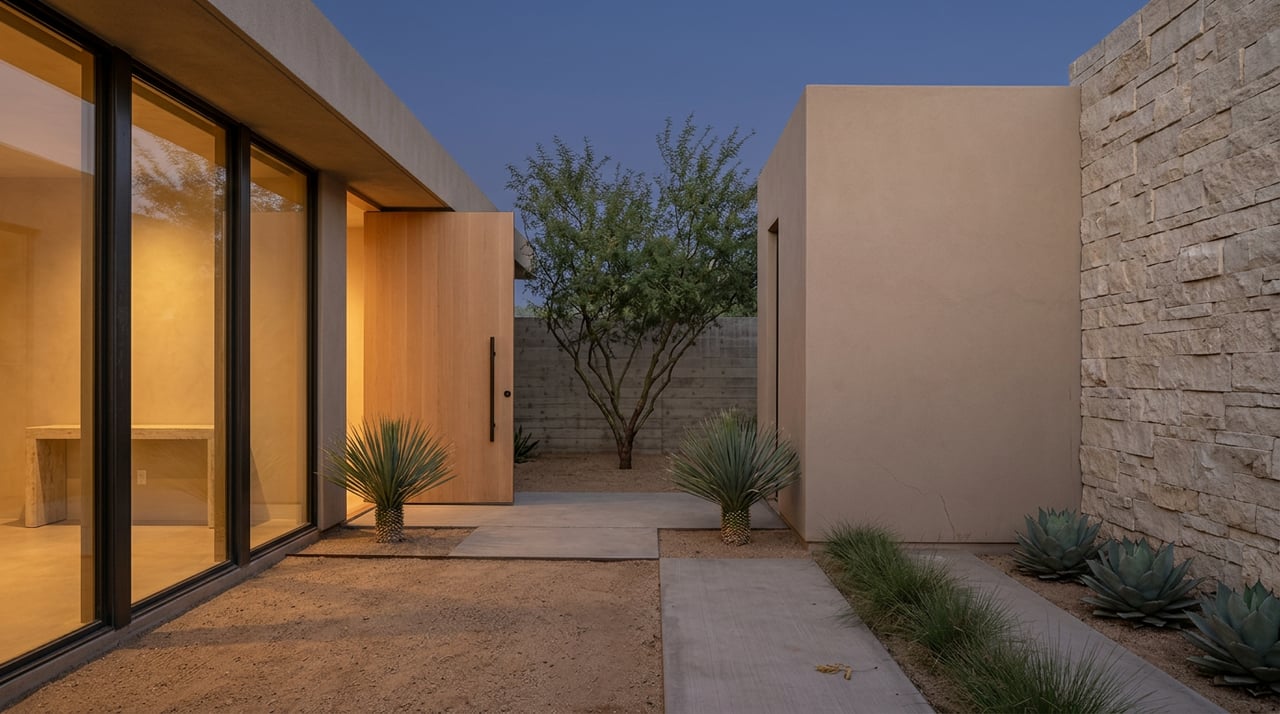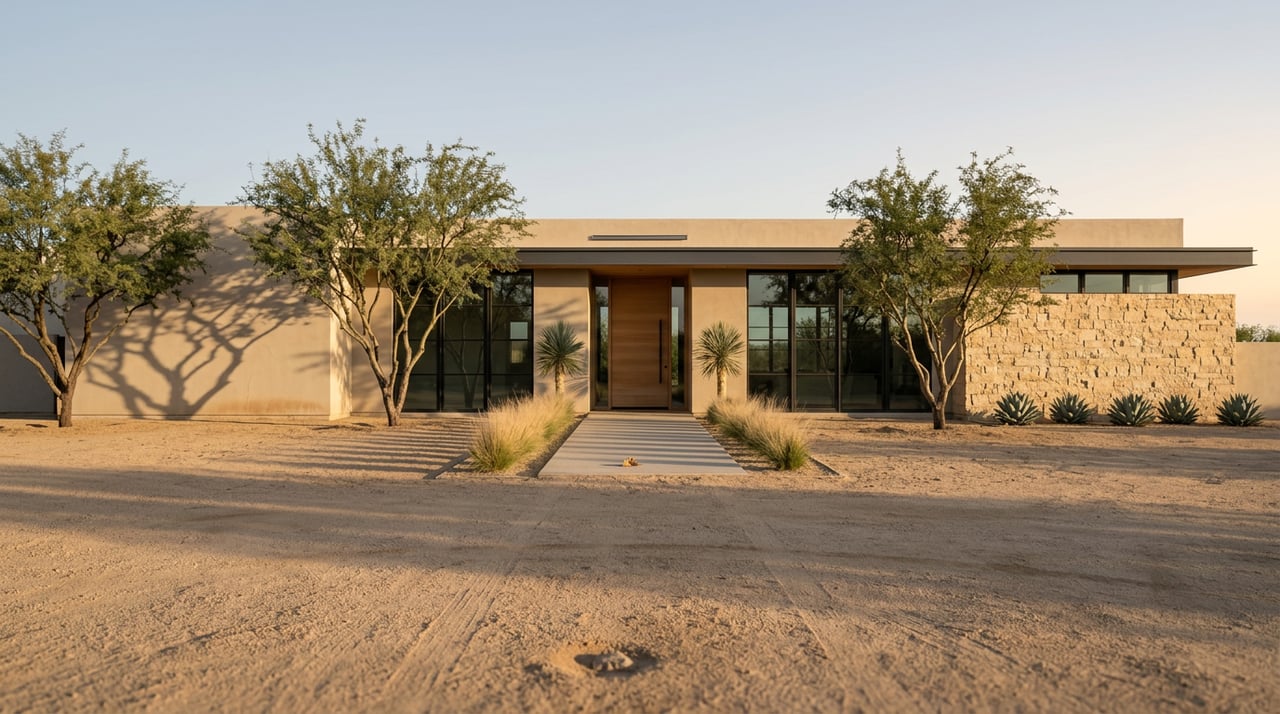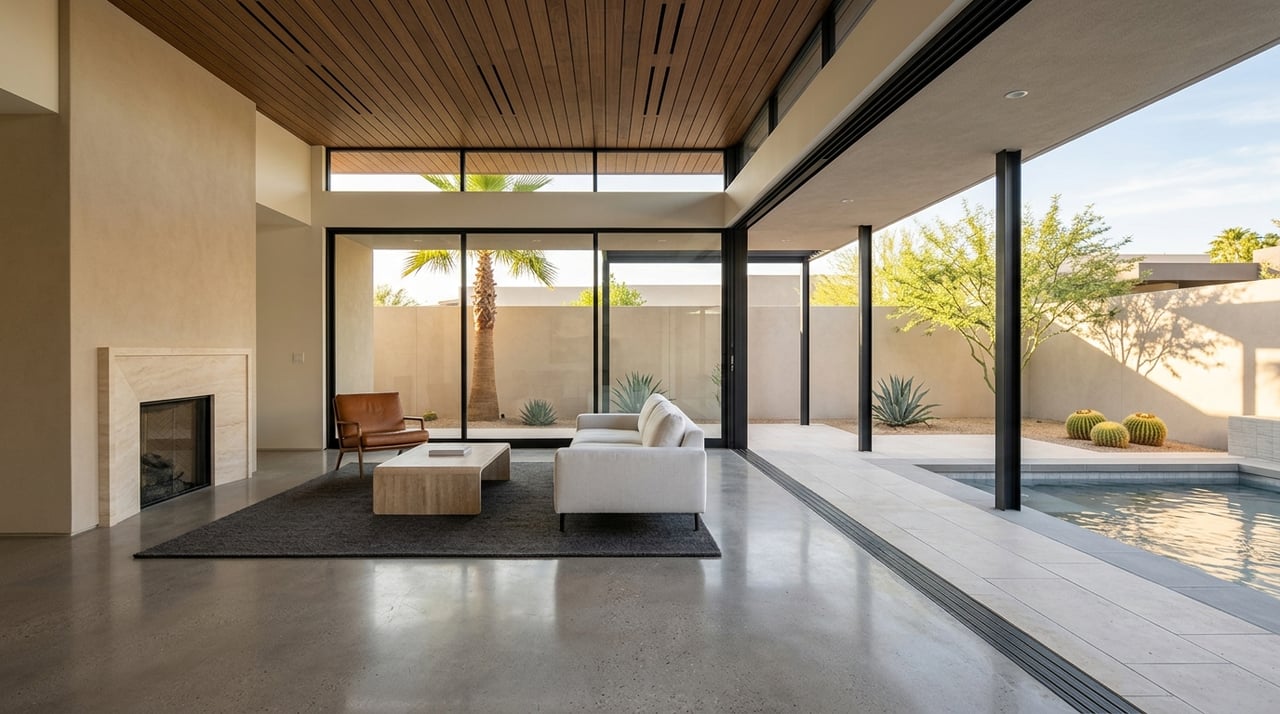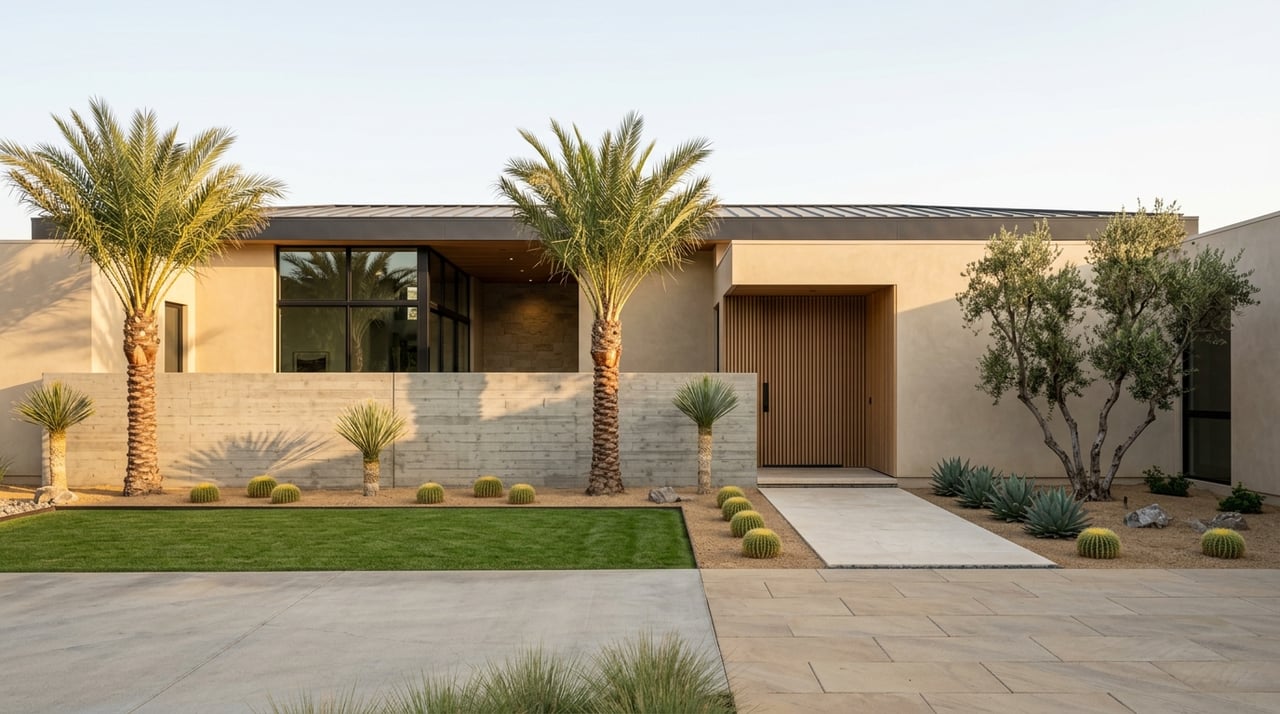
A buyer scanning the portals sees one number for Arcadia and assumes it describes one neighborhood. It does not. Inside the widely-cited footprint between 44th and 68th Streets, from Camelback Road down to the Arizona Canal, two submarkets are moving in opposite directions, and the headline price per square foot belongs to the smaller lots, not the estate blocks.
That is the piece the median hides. In March 2026, Redfin's Arcadia submarket showed a median sale price of $1.5M with price per square foot at $490, down 16.8% year over year. Arcadia Lite, the corridor pocket most locals draw between roughly 32nd and 44th Streets, sold at a $1.4M median with $636 per square foot, up 37.9% year over year. Same neighborhood name. Different market.
The MLS "Arcadia" field is a free-text box
Start with the label problem. When an ARMLS listing agent types "Arcadia" into the subdivision field, no data check stops them. A Sibbach analysis of every MLS listing that used "Arcadia" in that field returned parcels well outside the historic footprint, because the name carries a pricing halo and adjacent sellers know it. A June 26, 2026 Arcadia search on one aggregator returned 251 active listings ranging from a $190,000 studio at Meridian Condominiums to a $2.5M new-build ranch on East Turney Avenue in Cavalier Palms. Any median drawn across that pool is arithmetic, not information.
The original footprint was intentional. The 1919 plat used roughly five to ten acre lots and required a minimum house cost of $5,000, an unusually large-scale, residential design for the era. Founders Seymour Jordan, Robert Grace, and Charles Keafer set boundaries that later hardened into what residents now call Arcadia Proper, generally described as 44th Street to 68th Street between Camelback Road and the Arizona Canal. Arcadia Lite emerged decades later as an informal market term for adjacent blocks that share the tree canopy and dining access but sit on smaller, later-subdivided parcels. The City of Phoenix recognizes an Arcadia Lite Neighborhood Association, established in 2007 to serve roughly 250 single-family homes, but the name still travels further than the association's boundaries.
For a buyer comparing homes, the practical takeaway is that the "Arcadia" in a listing description is a marketing claim, not a data point. Verify subdivision at the Maricopa County Assessor level before you compare price per square foot to anything.
Two submarkets, moving apart
Once you split the label, the numbers tell a story the combined median erases.
| Submarket (Redfin, March 2026) | Median sale price | Median $/sqft | YoY $/sqft | Median DOM | Sales |
|---|---|---|---|---|---|
| Arcadia (Proper footprint) | $1.5M | $490 | −16.8% | 75 | 83 |
| Arcadia Lite | $1.4M | $636 | +37.9% | 45 | 37 |
Two submarkets separated by four blocks are trading almost 30% apart on price per square foot, and they moved in opposite directions over the past year. A portal median that averages them is describing neither.
Realtor.com's late-2025 Arcadia snapshot, at roughly $1.642M with $606 per square foot and a mid-90s percent sale-to-list ratio, sits between the two Redfin figures because Realtor.com draws a wider polygon. Peggy Young's neighborhood guide flagged the vendor-to-vendor gap directly, noting that snapshots shift with the map. The Redfin cut is the more useful comparison because it isolates the two pockets.
Why the smaller-lot pocket carries the higher price per square foot
This is the counterintuitive read, and it is where most portal-only research fails.
Arcadia Proper sells at a lower price per square foot because the denominator is misleading. Many Proper blocks still carry original mid-century ranch homes on quarter-acre to half-acre irrigated parcels. The lot holds the value; the house is often a placeholder waiting for a full remodel or a teardown. Builder guidance for luxury custom work in the Scottsdale-Arcadia corridor lands near $500 to $700 per square foot excluding land, with 12 to 30 month timelines from purchase to occupancy, which is why an Arcadia Proper buyer is often paying for dirt and design capacity rather than finished space.
Arcadia Lite runs higher per square foot because more of the inventory is already in its final form. New builds and gut remodels on roughly 10,000 square foot lots along and around 32nd, 40th, and Campbell dominate recent sales. Buyers there are paying for finished square footage, walkability to La Grande Orange, Postino, North, Chelsea's, INGO's, The Madison, and The Vig, and proximity to Biltmore Fashion Park. It is the same "Arcadia lifestyle" the corridor sells, packaged with less land and more house.
The Proper number understates value because the lot does the work. The Lite number overstates finish because the mix has tilted toward new construction. Neither figure means what a single-median reader thinks it means.
The Lite +92.9% year-over-year median move should be read the same way. That headline reflects mix shift as much as pure appreciation. When smaller pockets sell fewer than forty homes in a quarter and the composition tilts toward newly finished replacement product, the median rises without every existing home appreciating at that rate. Comps by block, era, and lot size matter more than the neighborhood tape.
The irrigation turnout is a parcel fact, not a street fact
The single largest diligence trap in Arcadia is treating flood irrigation as a neighborhood feature rather than a parcel right. It is neither uniform nor guaranteed.
SRP delivers roughly 800,000 acre-feet a year through 131 miles of canals and 1,000 miles of laterals, with zanjeros opening the gates on a fixed rotation. Residential subdivision deliveries run roughly every 14 days in summer, every 28 days in winter, per SRP's schedule. On a delivery day the yard receives two to three inches of water. Where the system works, it explains the mature canopy that defines the Proper streetscape.
Where the system does not work is where buyers get surprised. Many older Arcadia parcels were built with SRP canal or lateral access, but some turnouts were decommissioned over time, and whether a specific lot still receives delivery is parcel and account specific. A shared turnout on a block with multiple homes creates a coordination obligation that will land on the new owner. Accounts on parcels larger than one acre often operate on a water balance basis, with annual entitlement varying by assigned water rights. None of this shows up in the listing description.
The friction is transferable but not automatic. A house on a "flood-irrigated street" with a decommissioned or unrecorded turnout is a landscape retrofit waiting to happen, priced as if the trees will keep themselves alive.
What to verify before you write the offer
Read the parcel, not the neighborhood. The diligence order that separates a clean Arcadia purchase from an expensive surprise:
- Pull the Maricopa County Assessor parcel record and confirm the recorded subdivision. Compare it to what the MLS says. If they disagree, the listing is a marketing claim.
- Ask the seller for the last several years of SRP irrigation statements and confirm the turnout location, easement recording, and any shared-maintenance obligations with neighbors.
- If the parcel exceeds one acre, request the water balance statement and current annual entitlement.
- Verify school assignment by exact address through Scottsdale Unified. Arcadia High, Hopi, Ingleside, and Echo Canyon feed different portions of the footprint, and assignment can change street by street.
- Confirm zoning and municipal boundary. The footprint spans Phoenix and Scottsdale in places, and the Arcadia Camelback Special Planning District applies a 0 to 2 dwelling unit per acre density policy that shapes what a rebuild can become.
- Pull permit history. Older Arcadia ranches often carry decades of additions with mixed permit records, and Maricopa County typically reassesses limited property value on significant permitted improvements.
- Comp by pocket, not by name. A Proper half-acre ranch and a Lite new-build on Campbell should not appear in the same comp set.
The buyer who does this arrives at a price the median cannot see.
FAQ
Is Arcadia Lite actually appreciating faster than Arcadia Proper, or is that a mix effect? Both are true. Redfin's March 2026 read shows Arcadia Lite median price per square foot up 37.9% year over year against Proper down 16.8%, but a share of that gap reflects new-build and gut-remodel inventory replacing original ranches in the Lite sale mix. Real appreciation is present. The headline move overstates it.
Does every Arcadia street have flood irrigation? No. SRP delivery is parcel and account specific. Some original turnouts remain active, some were decommissioned, and some blocks operate through shared neighborhood systems that require coordination. Confirm the delivery status of the exact parcel before assuming the trees are on someone else's tab.
Why does Arcadia Proper sell at a lower price per square foot than Arcadia Lite? Because the Proper denominator is inflated by large lots holding smaller original homes. The value sits in the land and the entitlement to build, not in the existing finished square footage. Lite carries a higher price per square foot because more of its recent sales are finished new construction on smaller parcels.
If you are comparing an Arcadia Proper teardown against an Arcadia Lite finished build, or trying to price a Proper block against a portal median that averages both, the work is in the parcel and the pocket. Shawn Keeler with Russ Lyon Sotheby's International Realty advises buyers and sellers across Arcadia, Paradise Valley, and the Biltmore Corridor with a construction and land-value lens applied to every offer. Let's Connect.