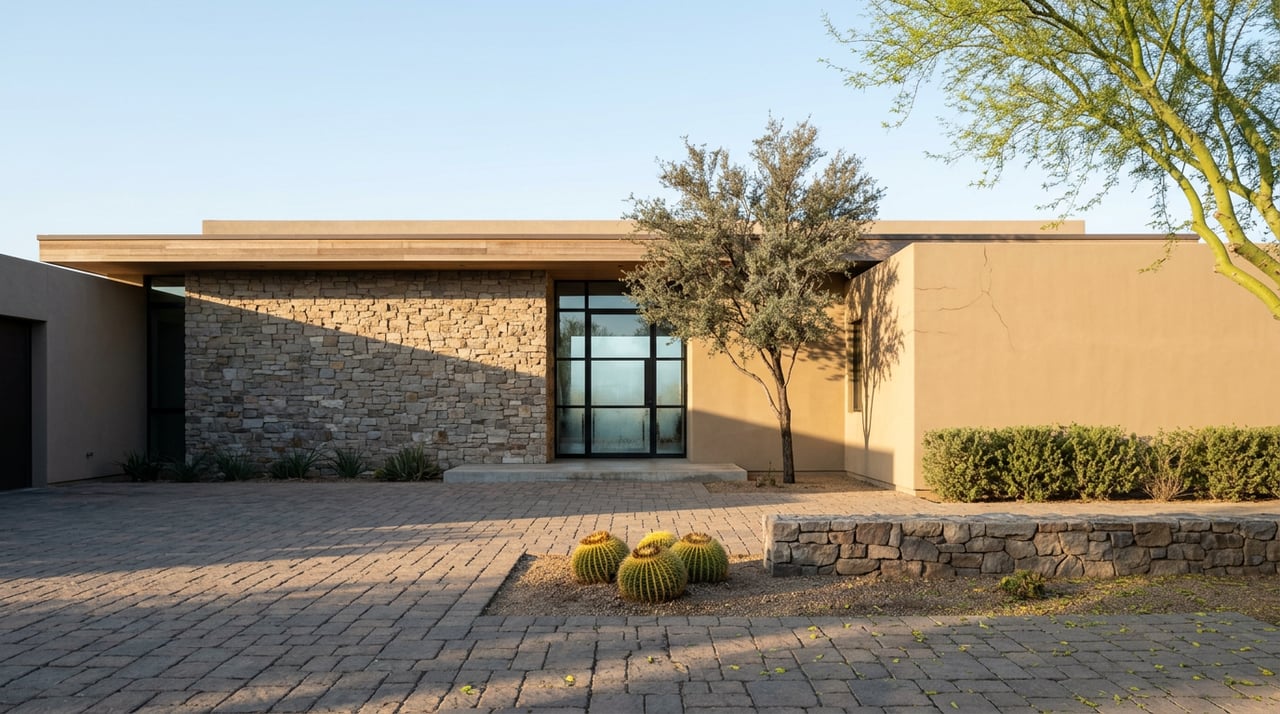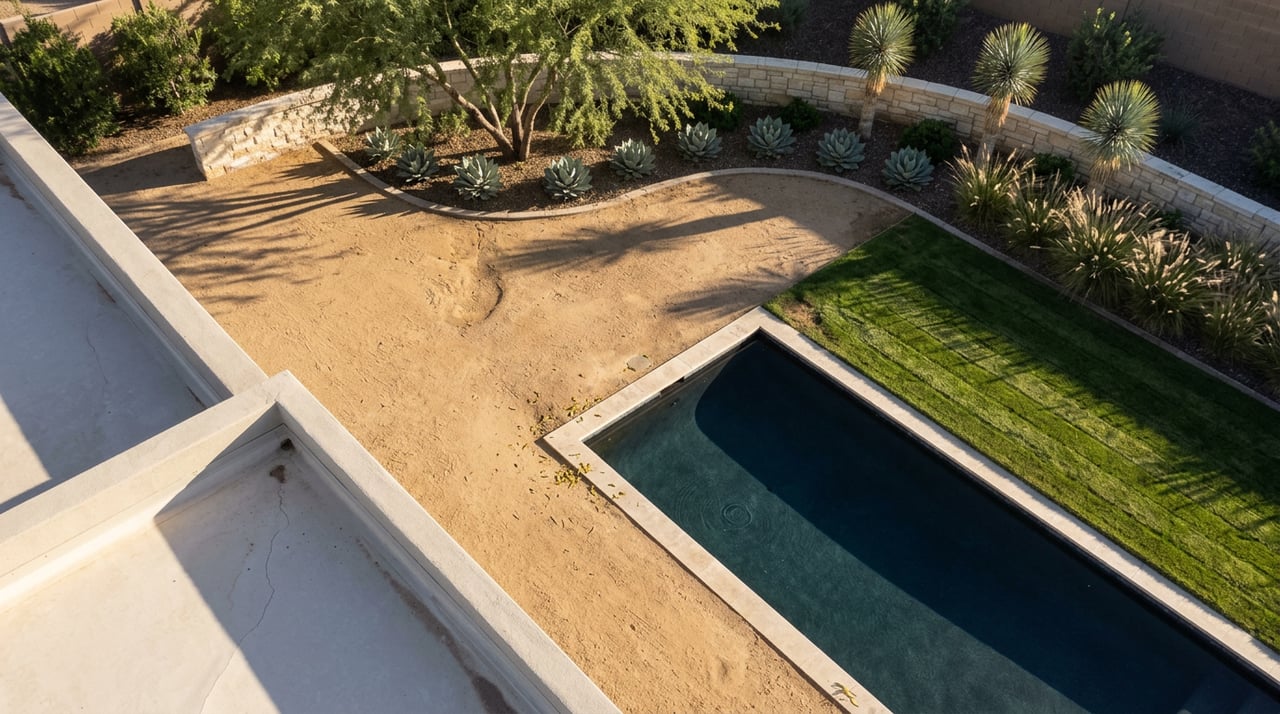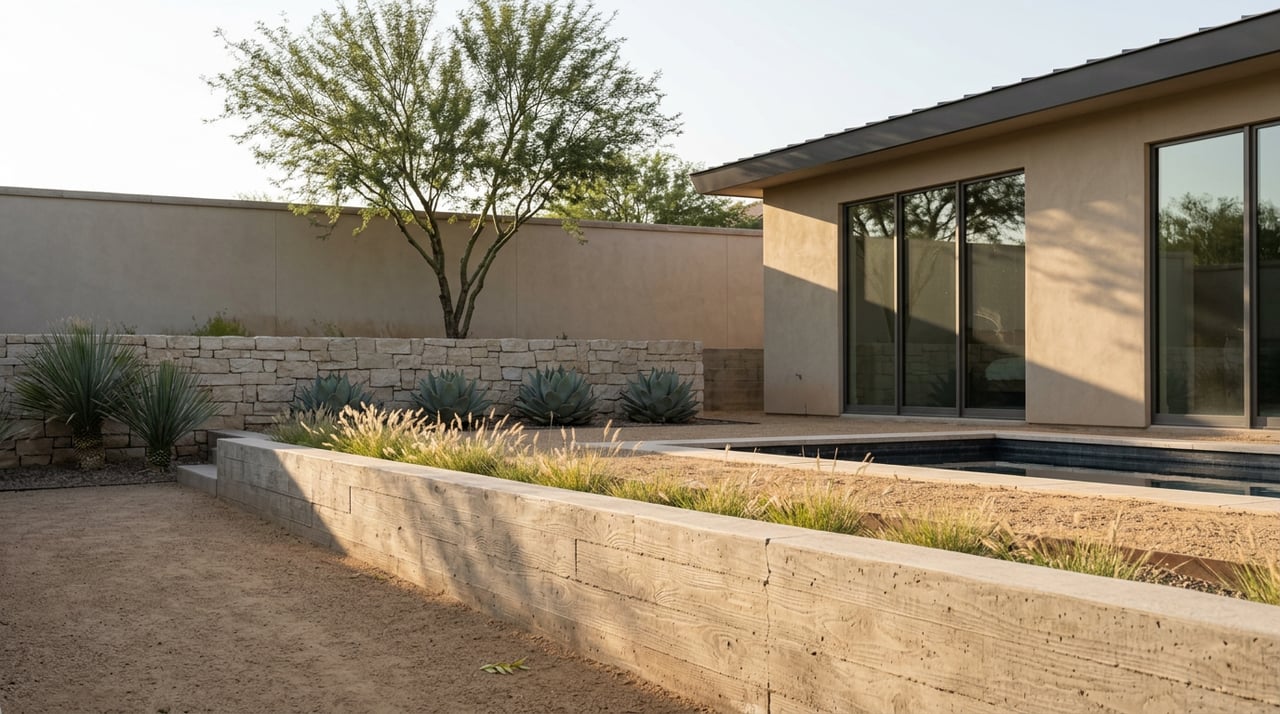
"A positive and natural consequence of Arcadia being one of the most desirable areas of Phoenix to live in."
That is how Peter Flynn, president of the Arcadia Camelback Mountain Neighborhood Association, described the wave of redevelopment reshaping the streets below the mountain. He was responding to a report that as of March 2026, fourteen Arcadia homes carried active demolition permits. Fourteen lots, cleared and rebuilt from the ground up, each one filing a fresh slope analysis and hillside grading plan with the city before a shovel goes in the dirt.
Here is the part that gets missed in every story about the teardown wave: those fourteen lots are, from a paperwork standpoint, some of the cleanest parcels on the mountain right now. A ground-up rebuild starts with a permit application. The slope gets measured, the disturbed area gets calculated, and the city has a file with your name on it before the first wall goes up.
The friction isn't in the teardowns. It's in the houses that never got torn down, the ones that got a retaining wall added in 2011, a pool deck extended in 2016, and a casita framed in without anyone pulling a permit, because a busy renovation year made it easy to skip that step. On flat ground, that kind of gap is a nuisance. On a hillside lot near Camelback Mountain, it can quietly undercut the one number a future owner actually needs.
The lot has a budget, and the city keeps the ledger
Phoenix's Hillside Ordinance, Section 710 of the zoning code, has applied to this terrain since 1972. Any parcel where the natural slope hits 10 percent or more falls under it, which describes most of the ground wrapping the base of Camelback Mountain on both the Paradise Valley side and the Phoenix-Arcadia foothills side.
The ordinance doesn't just restrict what you can build. It assigns every hillside lot a specific, calculable ceiling: a single-family hillside parcel may disturb 35 percent of the hillside area or 20,000 square feet, whichever is smaller, with no more than 25 percent of the lot allowed under roof. If a homeowner doesn't use the full 25 percent under roof, the remainder can be applied toward additional graded area beyond the building footprint.
Read that again as a budget, because that's what it functions as. The disturbed square footage on a hillside lot isn't a vague description, it's a number the Development Services Department has on file, tied to that address. Every retaining wall, every extended patio, every graded pad for a pool draws down that number whether or not anyone ever told the city about it.
That's the actual risk when work happens without a permit on hillside ground. It isn't only that the wall might not meet code. It's that the ledger stops matching the terrain. A future buyer, or their lender's appraiser, has no way to know how much of that 35 percent has actually been used until someone goes looking, and by then it's their problem to solve, not the seller's.
The rule changes depending which side of a line you're standing on
There's a second layer that catches people off guard, and it has nothing to do with slope. Section 652 of the Phoenix zoning code, the Arcadia Camelback Special Planning District Camelback Road Overlay, gives properties fronting Camelback Road between 44th Street and the eastern city limits a different set of wall height and setback rules than the zoning that governs everyone else nearby. A property owner in that strip can apply for additional wall height beyond what the underlying residential zoning allows, provided the landscaping in front of it comes from the Arizona Department of Water Resources' low water use plant list, with citrus permitted beyond the right of way, and the owner takes on maintenance of that landscaped strip.
The practical effect is that a six foot wall that's perfectly legal on one lot can be a violation on the lot around the corner, because the overlay boundary, not the block, is what decides the rule. Buyers who assume the neighbor's fence sets the precedent for their own project are working from the wrong map.
The Arcadia Camelback Mountain Neighborhood Association, founded in 1987 and covering roughly four square miles around the mountain, was the group that drafted the Special Planning District plan that created this overlay, and the group still tracks how it gets applied. Their own accounting shows more than 80 zoning variance cases reviewed over the past four years, a volume that reflects how often setbacks and wall heights on this terrain end up needing a formal exception rather than a routine sign-off.
Why this is a live issue right now, not a historical footnote
The association's public guidance on non-permitted construction is candid about why gaps happen: with the volume of construction underway in the neighborhood and contractors carrying long project backlogs, the incentive to skip a permit application and just get the work done is real. That incentive doesn't disappear when the market is active. It gets stronger.
You can see the scale of activity even in new construction. Just north in Paradise Valley, a 14,100 square foot spec estate planned for a Camelback-view lot on Indian Bend Road carries a $30 million price target, with a demolition permit filed in January 2025 to clear the site ahead of a planned Summer 2026 groundbreaking. That project is doing the paperwork in order, start to finish. It's the standing inventory around it, built and modified across seven decades of ownership, where the permit trail gets thin.
The association's own permit search tool, which pulls city records by address, exists precisely because gaps like this are common enough to need a standard way of checking. Their guidance notes that finding zero historical permits on an Arcadia-area property would be unusual. What you're actually looking for is a gap between the work you can see on the ground and the last permit on file for that address.
What actually happens at the closing table
Arizona's Seller's Property Disclosure Statement asks directly whether the seller is aware of any unpermitted construction on the property. That question doesn't go away because a contract includes an "as is" clause. Arizona law still requires a seller to disclose known material facts and latent defects, and that duty survives closing regardless of how the purchase contract is worded.
For a flat-lot home, an undisclosed unpermitted patio cover is an inconvenience the buyer can usually price around. For a hillside lot near Camelback Mountain, an undisclosed unpermitted retaining wall or grading job is different, because it throws off the one figure that governs what the next owner can still build. A buyer who wants to add a pool or a guest casita needs to know how much of that 35 percent disturbance allowance is actually left, and if the number on file doesn't match what's on the ground, that's not a cosmetic problem. It's the whole basis for the next phase of the property's value.
Before you list, or before you write an offer
A few things worth doing before either side signs anything, especially on sloped ground near the mountain:
- Pull the permit history for the address directly through the city's public search, going back far enough to confirm the search is returning real results, not a blank page.
- If the lot qualifies as hillside, ask whether an approved slope analysis and hillside grading plan is on file, not just a list of building permits.
- Confirm which zoning applies to the parcel specifically. A Camelback Road frontage lot inside the Section 652 overlay boundary is not governed by the same wall and setback rules as a lot one street over, even if the two properties look identical from the sidewalk.
- If you're selling, complete the disclosure statement early enough to research these questions yourself, rather than discovering a gap after a buyer's inspector does.
FAQ
Does the hillside ordinance apply to every home near Camelback Mountain, or only specific lots? Only the portion of a lot where the natural slope is 10 percent or greater. Estate inventory around the mountain splits into north-slope hillside parcels on the Paradise Valley side, south-slope hillside parcels on the Phoenix-Arcadia foothills side, and valley-floor parcels that have mountain frontage without hillside elevation. Only the first two categories fall under Section 710.
What if the unpermitted work happened decades ago, before I owned the home? The disclosure obligation covers what you're aware of at the time of sale, not who did the work. A permit search by address, going back as far as the city's records allow, can surface a gap you didn't know existed. Buyers increasingly run that same search before removing contingencies, so it's worth doing before they do.
Does the Camelback Road Overlay affect resale value, or just construction rules? It affects both. A wall or setback that's compliant under the overlay but wouldn't be compliant under standard zoning is only defensible as long as the overlay boundary is documented and understood. A buyer's lender or title company will want that boundary confirmed, not assumed.
Camelback Mountain rewards patience and a careful read of the file before the walk-through. If you're weighing a hillside purchase, a Camelback Road frontage lot, or a sale where the permit history needs a second look before it goes to market, Shawn Keeler can pull that file with you and walk the ground before you write the offer or sign the listing agreement. Let's Connect.